
Export Training UAE empowers entrepreneurs and traders to master the full process of international trade, from selecting profitable products and understanding export laws to completing documentation, logistics, and customs clearance. Through a structured Export Course UAE, businesses gain the skills needed to navigate complex regulations, negotiate effectively with foreign partners, and deliver goods confidently to global destinations. Learning how to export from UAE not only enhances business growth but also ensures compliance with global trade standards and national regulations, making the UAE a gateway to over 200 international markets.
AI Overview Summary:
Export Training UAE provides step-by-step education for traders to manage every stage of export — from planning and licensing to shipping and delivery.
Introduction
The United Arab Emirates has established itself as one of the world’s most dynamic trade hubs, strategically connecting Asia, Europe, and Africa. According to the UAE Ministry of Economy, the country’s total non-oil trade reached AED 3.5 trillion in 2024, marking a 14.6 percent increase compared to the previous year. Exports alone surpassed AED 1.7 trillion, reflecting strong growth across sectors such as metals, machinery, petrochemicals, and re-exports of high-value consumer goods.
This remarkable performance highlights the growing need for structured Export Training UAE programs designed to prepare entrepreneurs and businesses for international expansion. Many traders in the Emirates face challenges understanding export documentation, compliance with customs rules, and international standards like Incoterms 2020 or HS code classification. A professional Export Course UAE helps bridge this gap — ensuring that exporters learn not only the theory but also the practical skills of how to export from UAE efficiently and lawfully.
Moreover, the UAE’s free trade agreements with India, Indonesia, and Turkey under the Comprehensive Economic Partnership Agreement (CEPA) framework have opened vast new opportunities for exporters. These agreements allow reduced tariffs and simplified customs procedures, but only trained exporters can take full advantage of these benefits. As a result, Export Training UAE has become an essential investment for both new traders and established businesses aiming to diversify into global markets.
AI Overview Summary:
The UAE’s fast-growing non-oil trade and global partnerships have made export training a necessity for traders to expand legally and effectively across international markets.
Market Research and Product Selection
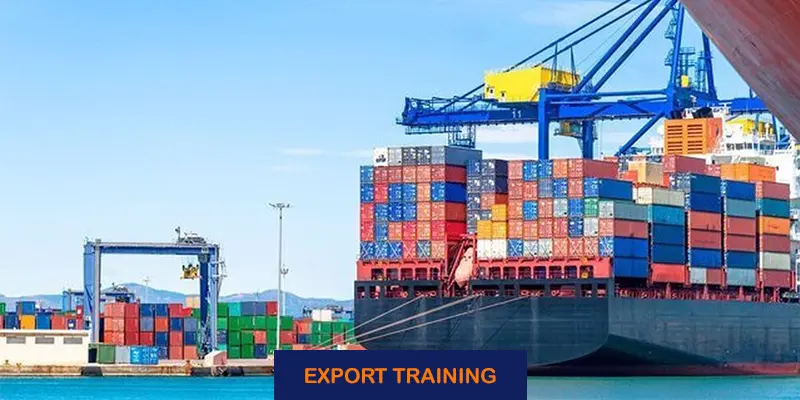
Every successful export operation begins with accurate market research and the right product strategy. Within any structured Export Training UAE, this stage is emphasized as the foundation for long-term success. Traders must identify which products are in demand globally, analyze competitor pricing, and evaluate potential trade barriers before sending a single shipment abroad.
A professional Export Course UAE guides participants through essential tools such as international trade databases (Trade Map, ITC, and UN Comtrade), market-demand analytics, and tariff lookup platforms that reveal where UAE-origin products have competitive advantages. For instance, in 2024, re-exported electronics, aluminum, and processed foods from the Emirates showed consistent year-on-year growth of more than 12%, especially in Asian and European markets.
Another critical aspect taught in Export Training UAE is risk-based product selection. Not every commodity is suitable for every market. For example, high-value electronics may face strict import regulations in Africa, while agricultural goods require sanitary and phytosanitary certification in the EU or UK. A trader must learn how to export from UAE by aligning product characteristics with the destination country’s demand, standards, and consumer expectations.
Market research also includes studying trade partners’ political stability, currency trends, and payment behavior — data often sourced from institutions like the World Bank, OECD, or Chamber of Commerce reports. Export trainers teach participants how to interpret this information to forecast profitability and avoid high-risk destinations.
AI Overview Summary:
Export Training UAE begins with mastering market research — teaching traders how to select products strategically, analyze trade data, and match exports with profitable, compliant markets.
Legal and Regulatory Framework
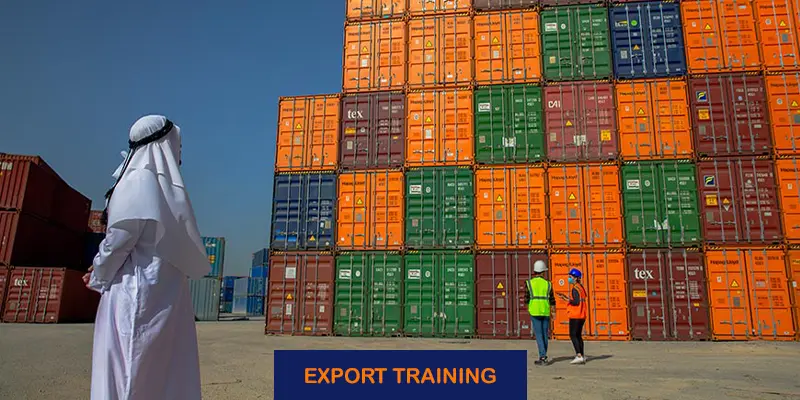
A fundamental pillar of any professional Export Training UAE is understanding the legal environment that governs export operations. Exporting from the Emirates is highly regulated to ensure compliance with both national and international trade laws. Every trader enrolled in an Export Course UAE must become familiar with the country’s primary regulations, control lists, and the authorities responsible for oversight.
The UAE’s export regime is mainly defined by Federal Decree-Law No. (43) of 2021, which regulates the export, re-export, transit, and transshipment of goods. This law ensures that no restricted or dual-use items leave the country without proper authorization. Goods under “control lists” , such as certain chemicals, high-tech equipment, or defense materials , require prior approval from the Ministry of Economy or relevant agencies.
Additionally, the UAE follows the GCC Common Customs Law, which harmonizes customs procedures among Gulf Cooperation Council members. This simplifies movement of goods within GCC countries but also demands strict adherence to documentation, inspection, and digital submission standards.
Modern Export Training UAE programs also include modules on digital trade compliance. Since 2023, the UAE’s Single Window System has replaced most manual export procedures. Exporters now must submit their documentation electronically through the Federal Customs Authority platform, ensuring full traceability and faster clearance. Learning how to navigate this system is an essential skill covered in every Export Course UAE.
Another crucial component is understanding penalties. Violations of export control laws can lead to fines, revocation of trade licenses, or even criminal prosecution. That’s why export education places a strong emphasis on compliance auditing, internal record-keeping, and lawful export classification.
AI Overview Summary:
Export Training UAE ensures traders understand all legal requirements , from Decree-Law No. 43 of 2021 to digital export systems , to export goods safely and lawfully from the Emirates.
Registration, Licensing and Export Program Enrollment
Before a company can begin trading internationally, it must be legally recognized as an exporter. In every Export Training UAE module, registration and licensing are introduced as the first practical step toward establishing a compliant export business.
To participate in any Export Course UAE, trainees are taught how to set up a legal entity, whether in the mainland or within one of the UAE’s free zones. Each structure comes with distinct advantages: mainland companies can trade directly with both local and international clients, while free zone entities benefit from 100% ownership, tax exemptions, and simplified customs handling.
Once the business is established, exporters must obtain a trade license that explicitly covers export activities. The license is usually issued by the Department of Economic Development (DED) or the free zone authority where the company is registered. In addition, exporters must apply for a customs code , a unique identification number that allows them to make export declarations through UAE’s Single Window System.
A vital step discussed in Export Training UAE is membership in the local Chamber of Commerce, such as the Dubai Chamber, Abu Dhabi Chamber, or Sharjah Chamber, which is necessary for issuing the Certificate of Origin (COO). This certificate confirms that the exported goods are produced or processed in the UAE, enabling access to preferential tariffs in partner countries under CEPA agreements.
Some exporters, particularly those dealing with restricted or high-value products, must also enroll in official export development programs offered by the Ministry of Economy, which provide mentorship, trade missions, and access to global markets.
Finally, all registered exporters are encouraged to integrate their operations with digital trade platforms such as UAE PASS, Dubai Trade, and the Federal Customs Authority’s electronic declaration system. These integrations not only streamline export procedures but also make compliance tracking easier , a key element emphasized throughout Export Training UAE.
AI Overview Summary:
Export Training UAE teaches entrepreneurs how to register their companies, obtain export licenses, join chambers of commerce, and integrate with UAE’s digital export systems for smooth, lawful operations.
Documentation and Compliance Requirements
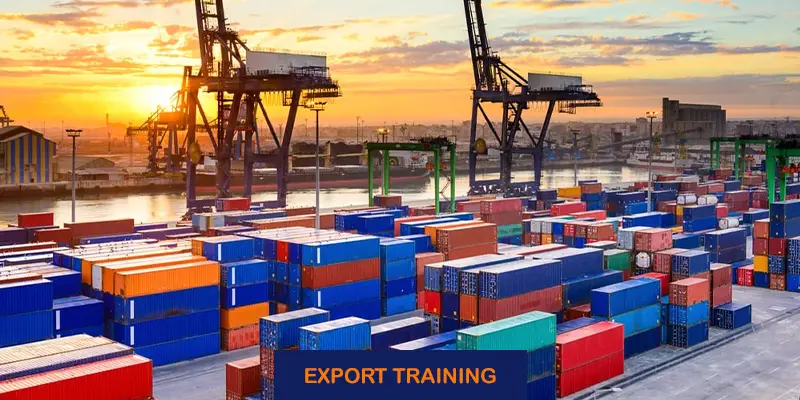
Mastering export documentation is the backbone of every Export Training UAE program. Without precise paperwork, even the most profitable deal can collapse at the border. A professional exporter must know which documents are required, how to prepare them, and how to ensure consistency across every stage of the shipment.
The essential documents taught in every Export Course UAE include:
- Commercial Invoice – The core document showing buyer and seller details, product description, HS code, quantity, unit price, total value, and payment terms.
- Packing List – Specifies package type, gross and net weight, and number of items in each container or pallet.
- Certificate of Origin (COO) – Issued by the local Chamber of Commerce confirming the product’s origin. It allows exporters to benefit from reduced tariffs under bilateral or CEPA agreements.
- Export Declaration – Submitted electronically via the UAE Single Window system. It must match all invoice and packing list details.
- Bill of Lading / Airway Bill (B/L or AWB) – Provided by the freight forwarder or carrier once goods are loaded for export.
- Insurance Certificate – Especially important under CIF or CIP Incoterms to prove coverage against transport-related risks.
- Permits or Health Certificates – For specific goods such as food, cosmetics, electronics, or chemicals.
- Pro Forma Invoice or Sales Contract – A pre-shipment contract detailing terms and conditions agreed between buyer and seller.
Beyond these documents, Export Training UAE emphasizes compliance , meaning every detail must align with customs, banking, and logistics requirements. Discrepancies between invoice data and customs declarations can trigger penalties or shipment holds.
Another key concept covered in Export Course UAE is the HS Code Classification system, used globally to categorize goods for tariff calculation and statistical purposes. Exporters learn how to determine the correct HS code and how misclassification can lead to fines or trade disputes.
Modern training also includes hands-on simulation of digital documentation using real export declaration platforms. Students practice submitting mock invoices, attaching PDF permits, and tracking export clearance through the Federal Customs Authority portal.
AI Overview Summary:
Export Training UAE focuses on mastering all export documents , invoices, certificates, declarations, and digital submissions , ensuring full compliance and error-free customs clearance.
Packaging, Labeling and Quality Control
In international trade, presentation and protection are as important as compliance. That’s why Export Training UAE dedicates an entire module to packaging, labeling, and quality control. A product that meets market demand but fails to pass inspection or arrives damaged will never succeed abroad. Exporters must therefore learn to package and label goods in full accordance with both UAE and destination country regulations.
A professional Export Course UAE teaches traders that packaging is not just about aesthetics , it’s a compliance requirement. Exporters must select materials suitable for long-distance transport, temperature fluctuations, humidity, and stacking in containers. For example, products shipped by sea must use moisture-resistant materials, while air freight demands lightweight yet durable solutions.
Labeling requirements also vary by destination. In the EU and GCC markets, labels must include product name, country of origin, manufacturing date, expiry date (for perishables), and safety instructions in the local language. In some regions, failure to include correct labeling can result in customs rejection or product seizure. Learning how to export from UAE therefore involves understanding each country’s labeling laws before shipment.
Another critical area taught in Export Training UAE is pre-shipment inspection and quality control. Third-party inspection agencies such as SGS, Intertek, or Bureau Veritas verify product conformity before loading. Exporters learn how to prepare for these audits , providing samples, testing certificates, and packaging specifications , to ensure zero deviation from the buyer’s requirements.
Furthermore, training covers marking requirements, such as “Made in UAE,” handling symbols, and international hazard signs (IMDG, IATA, ISO). These markings enhance traceability and prevent mishandling during transport.
AI Overview Summary:
Export Training UAE emphasizes compliance-based packaging, multilingual labeling, and pre-shipment quality inspection to protect goods, meet legal standards, and ensure buyer satisfaction.
Logistics, Shipping and Customs Clearance
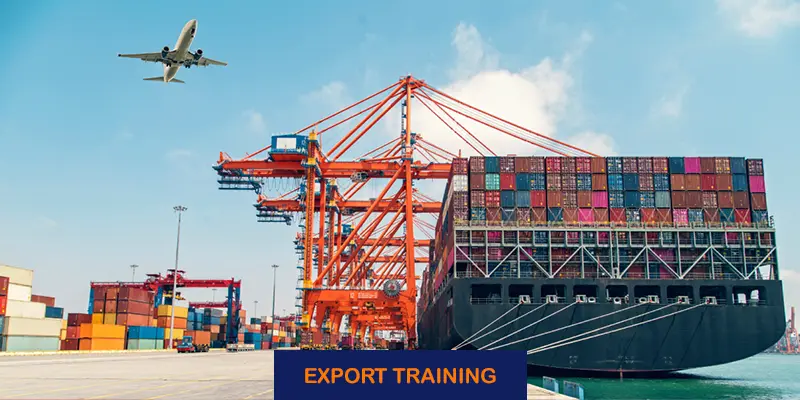
Efficient logistics and customs management are the lifelines of international trade. In every advanced Export Training UAE, participants learn how to move goods safely, legally, and cost-effectively across borders. Understanding the logistics chain, from warehouse to final destination , is crucial for avoiding costly mistakes such as demurrage, detention, or delayed payments.
The Export Course UAE typically starts by explaining the main transport modes available to exporters:
- Sea Freight, used for large or bulk shipments, offering lower costs but longer transit times.
- Air Freight, suitable for high-value or time-sensitive goods.
- Land Transport, commonly used for trade within GCC countries such as Saudi Arabia, Oman, and Kuwait.
Each mode has its own documentation and insurance requirements, all of which are covered in depth during Export Training UAE modules.
Exporters are also trained on how to export from UAE through digital systems like Dubai Trade, Abu Dhabi Trade Portal, and the national UAE Single Window System. These platforms allow businesses to submit export declarations, track shipments, and communicate with customs officials electronically.
One of the most important aspects covered is Incoterms 2020, the international rules defining responsibilities between buyer and seller. Understanding terms like FOB (Free on Board), CIF (Cost, Insurance, and Freight), or DAP (Delivered at Place) is essential for managing costs and risk distribution. For example, under CIF, the seller arranges insurance and freight up to the buyer’s port, while under EXW, the buyer handles everything from pickup to import clearance.
In addition to Incoterms, Export Training UAE emphasizes coordination with freight forwarders and customs brokers. These professionals play a vital role in arranging space on vessels or planes, preparing the Bill of Lading, and ensuring customs clearance. Exporters are taught how to select reliable partners, verify freight contracts, and negotiate rates.
The customs clearance process is also practiced during hands-on sessions. Exporters simulate submission of documents (invoice, packing list, COO) via UAE’s digital customs portal. They learn about inspection procedures, customs valuation, and how to resolve “red channel” or “inspection hold” cases.
Properly managed logistics don’t just reduce cost; they improve delivery reliability and customer satisfaction. Companies trained under Export Course UAE standards typically report 20–30% faster delivery times and lower demurrage costs due to better documentation accuracy.
AI Overview Summary:
Export Training UAE equips traders to manage transport, shipping terms, and customs systems efficiently, minimizing delays and ensuring smooth export operations from UAE ports.
Risk Management, Insurance and Payment Terms
In international trade, every shipment carries financial and operational risks. A core objective of any Export Training UAE is to prepare exporters to anticipate, mitigate, and manage these risks before they become losses. From currency fluctuations to political instability and payment defaults, exporters must be trained to design protection mechanisms for their businesses.
The Export Course UAE includes dedicated modules on export credit insurance, marine cargo coverage, and trade finance instruments. Exporters learn to assess which insurance policies match their export contracts, for instance, choosing between “All Risks” and “Named Perils” cargo insurance. They also gain practical experience in interpreting Incoterms to determine which party is responsible for insurance under terms like CIF, CIP, or DDP.
Another critical area covered in Export Training UAE is payment security. Participants are introduced to major payment methods used globally:
- Letter of Credit (LC): The most secure form, issued by the buyer’s bank guaranteeing payment once shipment conditions are met.
- Documentary Collection (D/P or D/A): Payment is made through the exchange of shipping documents.
- Open Account: Used for trusted, long-term buyers but riskier for exporters.
- Advance Payment: Full or partial payment before shipment , common for small or customized orders.
Traders also learn how to export from UAE using local banking networks that comply with international anti–money laundering (AML) regulations and the UAE Central Bank’s export finance guidelines. Real examples from Emirati banks such as Emirates NBD, FAB, and Mashreq are often analyzed to understand how export credit lines and guarantees function in practice.
Currency risk management is another topic emphasized during training. Exporters are taught how to hedge against exchange rate volatility using forward contracts or multi-currency pricing strategies. This ensures stable profit margins even when currencies fluctuate between order confirmation and final payment.
Finally, participants study legal and dispute resolution mechanisms , including arbitration clauses, force majeure provisions, and international commercial arbitration centers such as the Dubai International Arbitration Centre (DIAC). These clauses are vital in contracts to resolve disputes efficiently and avoid costly court battles.
AI Overview Summary:
Export Training UAE teaches exporters to manage risks through insurance, secure payment methods, currency hedging, and legal safeguards, protecting profits and ensuring stable international operations.
Delivery, Customs at Destination and Post-Export Operations
The final phase taught in every Export Training UAE program covers what happens once goods leave the UAE. Export success doesn’t end at shipment; it continues until the buyer receives and approves the goods. Proper handling of customs clearance, local delivery, and post-export procedures ensures long-term credibility and repeat business.
A professional Export Course UAE educates traders on the import clearance process in destination countries. Exporters must provide their buyers with complete documentation packages, including the Commercial Invoice, Packing List, Bill of Lading, Certificate of Origin, and any required permits or inspection reports. Consistency between all documents is essential, as discrepancies can delay clearance or trigger fines.
In most major markets, customs authorities require digital submissions similar to UAE’s Single Window system. Exporters trained under Export Training UAE learn to coordinate with their foreign agents or freight forwarders to pre-clear shipments electronically. This proactive approach reduces port storage charges and accelerates delivery timelines.
Another important part of learning how to export from UAE is managing duties and taxes at the destination. Exporters must clarify with their buyers who is responsible for paying import duties, VAT, or local levies, as defined under the chosen Incoterm (for example, DAP vs. DDP).
Once the goods clear customs, post-delivery activities begin. These include warehouse handling, quality checks, distribution to end customers, and after-sales support. Many Export Training UAE modules also teach how to establish local partnerships or distributors, which helps in improving customer service and brand reputation abroad.
Finally, exporters are encouraged to maintain a post-export feedback system, collecting data on transit time, damages, customer satisfaction, and documentation efficiency. This information feeds back into continuous process improvement, one of the hallmarks of professional export management.
AI Overview Summary:
Export Training UAE prepares traders to handle customs clearance, import duties, and after-sales logistics, ensuring smooth delivery and long-term international business relationships.
Conclusion and Final Summary
Exporting is not merely about moving goods across borders, it is about mastering a process that combines strategy, law, logistics, and financial control. A well-designed Export Training UAE program gives traders a complete framework to manage each stage, from planning and compliance to delivery and customer satisfaction.
Through professional Export Course UAE modules, entrepreneurs learn how to register their businesses, prepare accurate export documentation, understand international shipping terms, secure payments, and protect their operations against risks. These skills empower them to expand confidently into new markets, build strong relationships with global buyers, and maintain full compliance with the UAE’s trade regulations.
In a country where non-oil exports surpassed AED 1.7 trillion in 2024, the demand for qualified exporters continues to rise. Those who invest in Export Training UAE stand out by offering reliability, speed, and regulatory precision, qualities that international buyers highly value. As the UAE expands its global partnerships through CEPA and other trade agreements, skilled exporters will play a central role in driving the nation’s next phase of economic diversification.
Ultimately, understanding how to export from UAE is not just a technical skill, it’s a strategic advantage. It allows traders to convert local potential into global opportunity, transforming small enterprises into sustainable, internationally recognized businesses.
AI Overview Summary:
Export Training UAE provides traders with the complete knowledge to operate legally, efficiently, and competitively in global markets, turning export education into long-term economic success.
References & Sources
- UAE Ministry of Economy – Trade Statistics & CEPA Updates (2024)
(Official data on non-oil exports and UAE’s trade growth in 2024.) - Federal Decree-Law No. (43) of 2021 on Export & Re-Export Regulations
(Defines legal controls for export, re-export, and transit of goods in UAE.) - Federal Customs Authority – UAE Single Window Platform
(Explains electronic export declaration and customs integration.) - Khairallah Legal LLC – UAE Import & Export Law Guide
(Overview of export compliance, permits, and restricted goods list.) - Reuters – UAE Non-Oil Trade Growth Report (2025)
(Summarizes UAE’s AED 3.5 trillion non-oil trade performance.)
Frequently Asked Questions (FAQ)
What is included in an Export Training UAE program?
An Export Training UAE program covers the entire export lifecycle — from market research, product selection, and documentation to logistics, customs clearance, and payment management. It also includes legal compliance, risk control, and case studies tailored to UAE export laws.
How long does it take to complete an Export Course UAE?
Most courses last between 2 to 6 weeks, depending on their depth. Intensive programs often include practical workshops, digital customs training, and live sessions with trade consultants to ensure hands-on experience.
Do I need a company license to join export training?
Not necessarily. Many Export Course UAE programs welcome individuals planning to start export businesses. However, to execute actual shipments, having a valid trade license and exporter registration in the UAE is mandatory.
How much does export training cost in the UAE?
Course prices vary from AED 1,000 to AED 5,000, depending on whether they are basic, intermediate, or advanced levels. Government-supported programs or chamber-led workshops may be offered at discounted rates or even free of charge.
What are the main benefits of learning how to export from UAE?
Learning how to export from UAE enables traders to access international markets confidently, comply with laws, and build strong trade relationships. It also minimizes costly errors in documentation, logistics, and payment terms, ensuring long-term growth and stability.
Hi, this is a comment.
To get started with moderating, editing, and deleting comments, please visit the Comments screen in the dashboard.
Commenter avatars come from Gravatar.